
Curable: Chronic Pain Relief
Curable Inc.Medical
4.2374.00 Reviews
- Version
- 6.0.1
- Installs
- 100.00K
- Age Rating
- Everyone
Screenshots

Our Review of Curable: Chronic Pain Relief
 Analysis by Appyee
I approach any chronic-pain app with one practical question: does it offer useful support alongside the care I already rely on, without asking me to treat a phone as a doctor? That is the lens I’d use with Curable: Chronic Pain Relief. It is a medical app from Curable Inc., built around learning and exercises related to the experience of pain. I would consider it most seriously if I wanted a structured way to explore the mind-body side of pain, rather than another tool focused mainly on symptom tracking or quick fixes.
It is free to download, though in-app purchases range from $11.99 to $399.99 per item, so I would check what is included before committing to a paid option. The app is rated for Everyone, and its current version is 6.0.1. Those details matter less than whether its approach suits you: a person looking for guided reflection may find a useful routine here, while someone seeking diagnosis, urgent advice, or a replacement for medical treatment should look elsewhere.
Decide by the kind of help you want
Chronic pain can make it hard to know what to try next. I would separate the decision into three needs: medical evaluation, practical day-to-day tracking, and support for the thoughts, stress, and attention that can accompany pain. Curable is aimed most clearly at that third area, while also giving users ways to record experiences and engage with guided material. That makes it a possible complement to care, not a substitute for a clinician’s assessment.
The distinction is important. An app can help me notice how pain changes around sleep, activity, mood, or stressful moments, but a record alone cannot explain the cause or rule out a medical problem. If symptoms are new, severe, changing, or worrying, I would prioritize professional advice. If I already have a care plan and want a more consistent way to work on coping skills between appointments, this type of app may be more relevant.
Getting Started with Curable
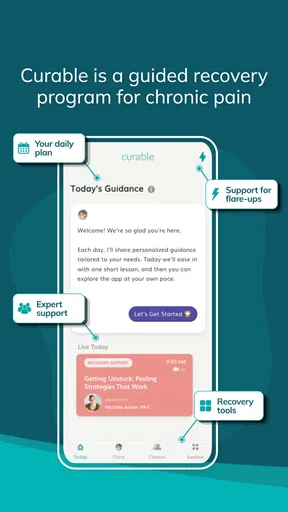
First things first, downloading the app was a breeze. It’s available on both Android and iOS, so no worries there. Once installed, you’re greeted with a pretty clean and intuitive interface. Signing up was quick, and I was soon exploring the different features. Right off the bat, the app feels like it’s designed to be user-friendly, which is always a good thing when you’re dealing with tech.
The Science Behind the Relief
Now, what really intrigued me about Curable is its approach to pain management. The app combines insights from neuroscience, psychology, and pain science to help users understand and manage their pain. It’s not just about masking symptoms but getting to the root cause. They use this concept called "neuroplasticity," which, in simple terms, means retraining your brain’s response to pain. Pretty cool, right?
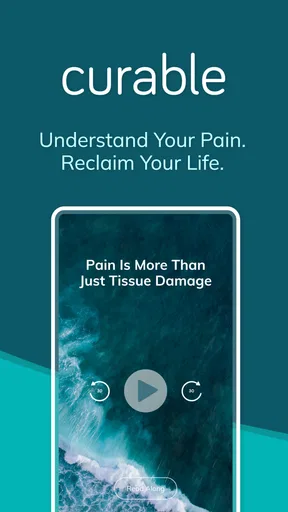
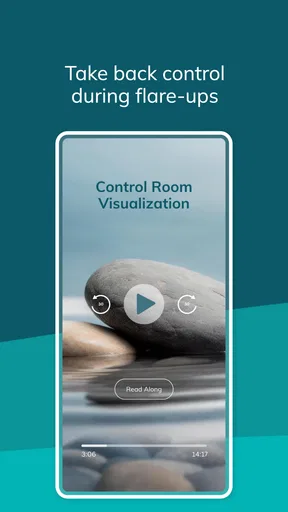
The app offers audio lessons, exercises, and meditation sessions. These are designed to help you reframe your thoughts about pain. I found the audio lessons particularly enlightening. It’s like having a mini-therapy session, and honestly, it’s quite comforting. The exercises are tailored to help reduce the psychological stress that often accompanies chronic pain.
Where the approach can fit into a real day
The most useful way I can imagine working with these lessons is to attach them to a moment that already exists in my routine. For example, after getting home from work, I could listen to a lesson before deciding how to spend the evening. If pain has left me tense or discouraged, a short guided exercise may help me pause and respond more thoughtfully instead of immediately assuming the whole day is lost. The point is not to force a positive mood; it is to create a small, repeatable space for reflection.
I would also avoid making the app another demanding task. On a high-pain day, trying to complete a long sequence or “catch up” on missed sessions could become frustrating. I’d choose one manageable activity, then stop if concentrating becomes tiring. That makes the experience more sustainable than treating every prompt as homework. If the audio format is easier than reading when symptoms flare, I’d start there; if listening is uncomfortable or distracting, the app may be less convenient in that moment.
A practical tip for the journal is to record context as well as intensity. A brief note such as “worked at the desk for a long stretch” or “slept poorly” may be more useful later than a string of numbers on its own. I would look for recurring associations, not assume that a single coincidence proves a trigger. Pain patterns can be complex, and the journal is best treated as a personal observation aid to discuss with a clinician when appropriate, not as a diagnostic tool.
Features Worth Highlighting
One feature I found super helpful is the "Pain Journal." It’s a simple tool where you can log your pain levels, triggers, and any emotional factors. Over time, this helps in identifying patterns and triggers. It’s really empowering to see your own progress laid out like that.
Another standout is the "Guided Meditation" section. If you’re into mindfulness or just looking to relax, these sessions are golden. They’re not too long, so even if you’re new to meditation, it’s easy to get into. Plus, the calming voices are a nice touch.
How it compares with other kinds of support
Compared with a basic symptom diary, Curable’s stronger appeal is the combination of tracking with audio learning, exercises, and meditation. A plain tracker may suit someone who only wants quick entries to take to an appointment, especially if they prefer not to work through lessons. Curable makes more sense when I want to spend some attention on how I think and feel around pain, rather than simply recording what happened.
It also differs from an appointment with a therapist, pain specialist, or other clinician. A guided app can make practice easier to access in everyday life, but it cannot respond to my individual medical history in the way a professional can. Likewise, if I mainly need movement guidance or a physical rehabilitation plan, I would look to a qualified provider for recommendations tailored to my condition. I see the app as one possible layer of support, not an all-purpose pain program.
There is a trade-off in the mind-body framing itself. Some people may find it validating to learn that pain is influenced by more than tissue damage and that coping skills can matter. Others may hear that message as implying their pain is imagined or their fault. I would want the material to feel respectful of the reality of the pain I experience. If an exercise feels invalidating, I would stop and bring that reaction to a healthcare professional rather than forcing myself through it.
Engaging and Motivating
What I really appreciate about Curable is how it keeps you engaged. There’s a community feel to it, with forums where you can connect with others on similar journeys. It’s reassuring to know you’re not alone and that others are rooting for your success.
The app also sends reminders and motivational messages, which I find uplifting. Sometimes, a little nudge is all you need to stick with it, especially on tougher days.
Before you build it into your routine
Reminders can help establish a habit, but they can also feel like pressure when pain disrupts plans. I would set expectations gently: missing a day does not mean the effort has failed. If notifications become irritating, I would adjust or ignore them rather than let a prompt define whether I am making progress. Similarly, community features may feel supportive to one person and overwhelming to another; I would use them only if hearing from peers genuinely helps me.
The main cost question is not just whether the download is free, but whether a paid purchase makes sense for how often I expect to use the material. Since the available in-app purchases span a wide range, I would inspect the purchase details and consider my budget before choosing one. I would not assume that paying guarantees relief, nor buy during a difficult flare simply because I want an immediate answer. A sensible test is to first decide what kind of guidance I need and whether I can realistically make room for it.
Switching from another approach has a cost too: time and attention. If I already keep a diary or use a clinician-recommended plan, I would not abandon it just to start fresh in a new app. I’d try Curable alongside that routine for a limited, manageable period and note whether the lessons or exercises add something distinct. If they do not, there is no reason to maintain another habit just because it is available.
Who is likely to benefit—and who may prefer something else
I think this is most promising for someone with ongoing pain who is curious about pain education, reflection, and guided relaxation, and who is comfortable trying self-guided exercises. The app’s reach is reflected in its 4.2 average from around 1,400 ratings, with over 100,000 installs, but popularity cannot predict how any one person will respond. I would judge it by whether its approach feels useful and respectful in my own circumstances.
I would skip it, or at least not rely on it, if I needed urgent medical help, a diagnosis, individualized treatment decisions, or a substitute for prescribed care. It may also be a poor fit if I strongly dislike audio guidance, meditation, or reflecting on emotions, or if I want a straightforward tracker with minimal content. In those cases, a clinician, a simple note-taking method, or a different kind of support may serve the immediate need better.
Wrapping Up My Experience
After using the app for a while, I can honestly say it’s a valuable tool in managing chronic pain. It’s not a magic cure, but it definitely provides support and resources that can make a significant difference. If you're open to exploring how your mind and body are connected, Curable could be a game-changer.
So, if you’re tired of the usual pain management routines and looking for something that addresses both mind and body, give Curable a try. It’s like having a pocket therapist, coach, and buddy all rolled into one. Remember, it’s all about progress, not perfection, and Curable seems to get that.
My clear recommendation is to treat it as an optional companion to a broader pain-care plan, especially if you want structured audio learning and a gentle way to observe your own responses. I would begin with a small, repeatable routine, use the journal for context rather than conclusions, and keep professional care in the picture. If that balance sounds right for you, Curable is worth exploring; if you need a medical answer or a highly individualized program, choose that support first.
Verdict
Strengths of Curable: Chronic Pain Relief
- User-friendly interface for easy navigation.
- Wide range of guided pain relief exercises.
- Personalized progress tracking and feedback.
- Expert-researched content for effective relief.
- Available offline for convenience on the go.
Limitations of Curable: Chronic Pain Relief
- Subscription required for full access.
- Limited free content without subscription.
- Initial setup may be time-consuming.
- Requires regular use for best results.
- Not a replacement for professional treatment.
Similar Picks in This Category
View All
WebMD: Symptom Checker
WebMD, LLC4.1

Microphone Amplifier
DOSA Apps4.2

Anatomy Learning - 3D Anatomy
3D Medical OU4.5

Period Tracker and Calendar
SimpleInnovation4.9

GoodRx: Prescription Coupons
GoodRx4.8

CVS Health
CVS Pharmacy4.5
Frequently Asked Questions
What is Curable: Chronic Pain Relief and how does it work?
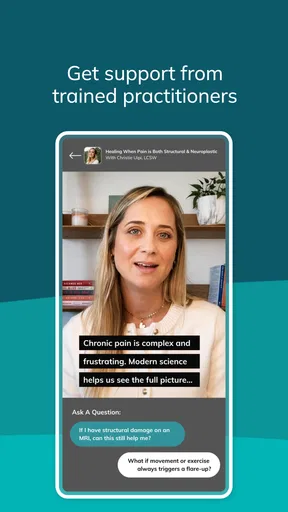
Curable is an app designed to help users manage chronic pain through a mind-body approach. It offers educational content, guided meditations, and exercises grounded in neuroscience. The app's goal is to address the psychological and emotional aspects of pain, helping users reduce symptoms and improve quality of life over time.
Is Curable suitable for all types of chronic pain?
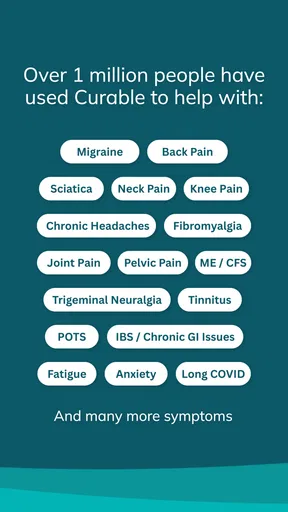
Curable is designed for a wide range of chronic pain conditions, including back pain, migraines, fibromyalgia, and more. However, it is crucial for users to consult with a healthcare professional to ensure the app's methods align with their specific needs and medical conditions before starting any new treatment.
How often should I use Curable to see results?
For optimal results, users are encouraged to engage with the app regularly, ideally a few times a week. Consistent use allows individuals to better integrate the techniques and insights provided, aiding in symptom reduction and overall pain management. Progress may vary based on individual needs and conditions.
Is there a subscription fee for Curable?
Yes, Curable operates on a subscription model. Users can choose from monthly or annual plans, which grant access to the full range of features and content available in the app. There may also be a free trial period for new users to explore the app before committing financially.
Does Curable require internet access to function?
While some features of Curable can be accessed offline, such as downloaded exercises, most of the app's content requires an internet connection. This includes accessing new educational modules and updates. Users should ensure they have reliable internet access for the best experience.
